



GOPHERS' HISTORY
History
The Gophers’ Society was founded in December 1924 by R. N. (Bob) Williams, of whom more later. It was formed “to bring together twenty good men and true to uphold the best traditions of the Royal and Ancient Game of Goph and to foster the spirit of good fellowship and convivial absorption”. A century on, no-one has accused us of falling short of that objective!

Gophers are North American burrowing rodents, the size of a large rat, with a particular reputation for wrecking turf. In 1959, a Canadian member, Gordon MacEachern, presented the Society with a stuffed gopher which is only brought out at the annual dinner and placed to keep a beady eye on the President’s behaviour. The R&A rules in 2000 included a mention of gophers in connection with guidance on burrowing animals.
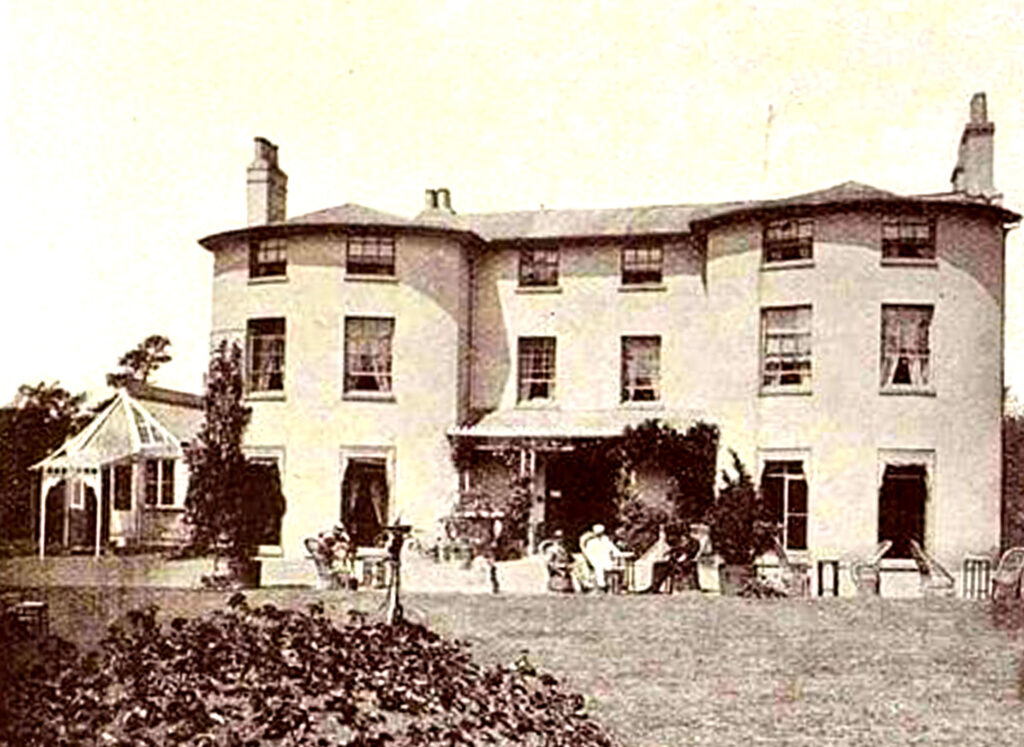
Most of the founding members were from Neasden Golf Club which, only five miles from Hyde Park corner, was closed for development in 1934. It was built in the grounds of Neasden House, a 17th century mansion which became the clubhouse. The course was designed by David Cuthbert, (St Andrews), and opened in 1893. It was a rather aristocratic club and by 1910 had 500 members paying a subscription of seven guineas a year. Harry Vardon was the course record holder (74).
Our Society is listed in the 1952 ‘Golfers’ Handbook’, a weighty tome of 918 pages, (immediately below the Golf Traders Golf Society which has lapsed, and above the Grays Inn Golfing Society which is still active). The Society’s annual subscription in 1924 was five shillings, in 1974 £3.50, and now £25, so a linear inflationary progression.
First Gophers
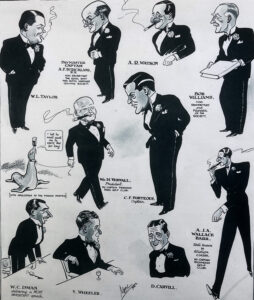
Early records are lost but our old trophies help identify some of the members. However, the Mel cartoon in the Tatler’s long series of “Golf Clubs and Golfers”, published in January 1936, is helpful historically. Quite apart from its thumb nail sketch of our origins, it indicates the Society’s social presence and tells us a little more about some of our early members. Captain A F Strickland RN was the Royal Navy paymaster, secretary of the Royal Navy Golf Society and its Captain throughout World War II. A J A Wallace Barr was a pioneering commercial aviator and a former Captain of Richmond Golf Club. The cartoon is still brought out at each Annual Dinner.

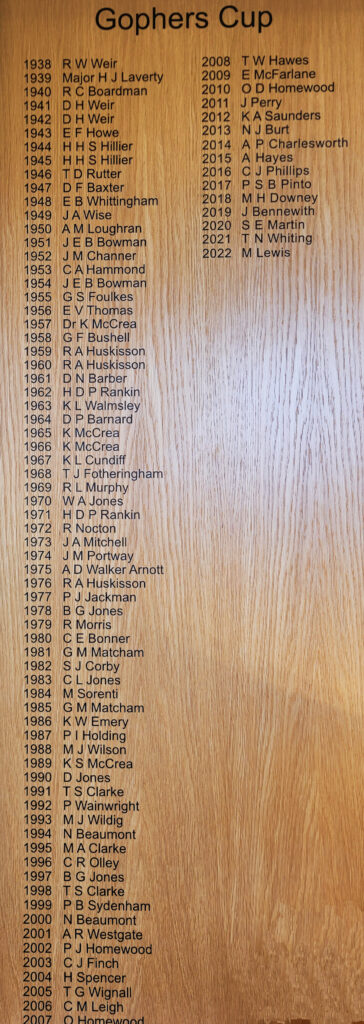
Thorndon Park Gopher trophy
The Annual Dinner
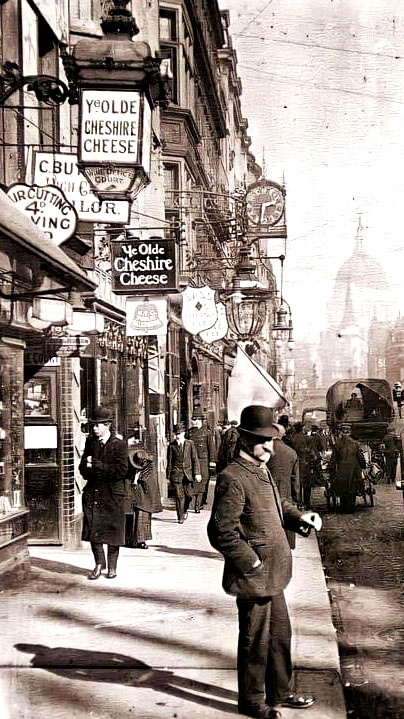
The first Annual Dinner in 1924 was held at Ye Old Cheshire Cheese in Fleet Street, the menu being pea soup; steak, kidney, lark and oyster pie; and toasted cheese. Probably because the second President, M J Whitby, was a Master of the Worshipful Company of Inn Holders, the Annual Dinner gravitated to their hall, where it continued until 1989.
The Dinner then moved to Richmond Golf Club and subsequently to Burhill Golf Club.
In 2023 we returned to Ye Old Cheshire Cheese to hold a lunch instead of dinner.
First Golf Meetings
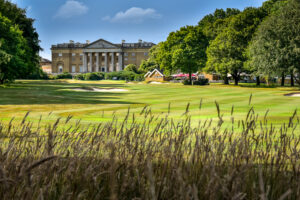
In the early days, many of the Gophers’ competitions were played at Thorndon Park Golf Club, near Brentwood, which allowed us to play at weekends. This opened in 1920, the course being designed by Harry Colt in the grounds of Thorndon Hall, a Palladian mansion part of which originally was the club-house.
The Gophers presented the club with a trophy in 1937 (still played for) in appreciation of the help they gave us (and perhaps also because our then President, William Vernall, was a former captain there). That club continues to flourish and is listed in the top 100 clubs in England.
The Effects of WWII
In WWII, while some courses remained open and active, many links courses, particularly in the south and east, were closed for defence needs. There was no professional golf and certainly our Society was in abeyance. After the war, numbers were depleted, arguably indicating that our size was in danger of being too small. Survival then is a tribute to the leadership at the time.
In 1948, the Sudbrook Wanderers Golfing Society, based at Richmond Golf Club, was absorbed, and allowable numbers of members increased to 33 plus the President. Since then, over a dozen past captains of Richmond Golf Club have been Gophers.
Spring Meetings
From 1948–2010, Spring Meetings were held at the Berkshire, where we had some influential members. Bill Spence lived in a house opposite the Red course first green and very generously hosted the cocktail party that followed the prize giving.
In 2011, the Berkshire dramatically increased the cost of golf & lunch. The then Scribe, Geoff Wyborn, decided we should move to West Hill.
In 2023, the effects of Covid 19 resulted in more people playing golf and as a result the cost of golf, particularly for Societies, sky-rocketed. So the Spring Meeting moved to Royal Wimbledon where we have three members enabling reduced costs for everyone.
The Spring Meeting trophies are:
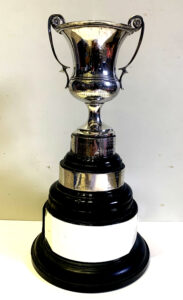
The Inman Cup, (left) presented by W C Inman, for the morning Stableford;
The Wilson Salver, presented by Jim Wilson when he was our President, for the best Stableford scores in the par 3s;
The Whitby Harwood Cups, presented by the second President M J Whitby, jointly with Harwood, for the after-noon Foursomes.
Autumn Meetings
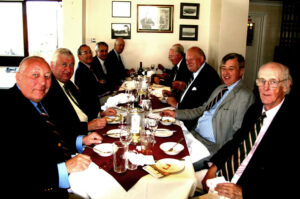
Autumn Meetings were often held at Littlestone, one of the top 100 courses in England, until we were no longer able to get our wish for a weekend fixture. Again a Gopher, Arthur Young, who had a holiday home over-looking the 18th hole, was a most hospitable party host. Sadly, there is no accommodation nearby which meant a longish drive to Hythe to stay in the Hythe Imperial Hotel. Also, some of the older Gophers found the Littlestone course a bit of a challenge particularly over three days. So, in 2012 we moved to Cooden Beach Golf Club, a course designed by W. Herbert Fowler and opened in 1912. The Cooden Beach Hotel was conveniently situated 200 yards from the Club and in the early days gave a discounted rate for golfers.
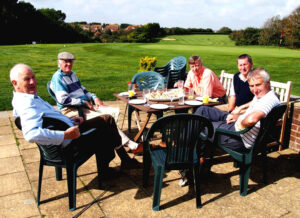
A range of other venues has also been used, memorable for different reasons, and include Aldeburgh, Thorpeness, Princes (Sandwich), Royal Cinque Ports, Royal Eastbourne, Blatchington (Seaford), Piltdown, Littlehampton, Broadstone, Isle of Purbeck, Burnham and Berrow, Seaford, Saunton, Rebetz Chaumont-en-Vexin (about 30 miles north of Paris) and Hardelot (about 10 miles south of Boulogne). In 2023, the Autumn Meeting returned to Princes, Sandwich, where they have a very good dormy house.
The Autumn Meeting trophies are:
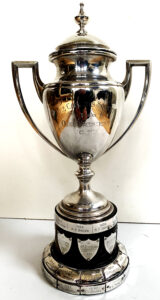
The Shead Cup for the singles Stableford on day one;
The C T Hill Cup,(left) presented by our first President, for the singles Stableford on day three;
The Putting Cup, presented by Malcolm Smith in 1956.
Matches
XL Club Match
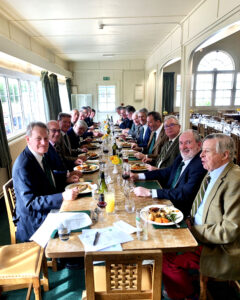
The XL, or Forty, Club is a cricketing society that also has a golf section. A number of Gophers are also XL members. In 2004, a 36 holes Foursomes match against the Forty Club was started at Woking Golf Club. A trophy was presented for this match by current Gopher & XL Club member, Tony “Whispering” Lowe.
Bucks and Savile Golf Society
The Bucks and Savile are London clubs. They both had golfing societies that had been going for some time. In recent years, golfing numbers were reducing for both societies. Michael Estorick, a Gopher and also a member of both clubs, brought the golfing sections together and now runs a number of fixtures for the combined society. In 2023, the first match with the Gophers was arranged by Michael and played at The Addington.
Gophers To Remember
This is just a snapshot of a few of the lovely men that have made the Society what it is. Apologies to many others who may have deserved just as much to have been included.
R N (Bob) Williams
Bob was a founder member and the first Scribe, who extraordinarily held that role for 38 years. By all accounts, it was he who established the happy principle of absolutely benign total dictatorship that has served us so well. Despite this, or maybe because of it, he was held in great reverence. By profession he was an officer of the High Court and liked to wear his black silk gown over evening dress while officiating at the Annual Dinner. He died in 1981, so the duration of his membership was 57 years. Our last Scribe, Geoff Wyborn (more to follow), tried wearing his University gown at the dinner, but just once. We owe Bob a great debt of gratitude.
Ronnie Seddon
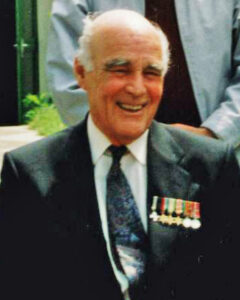
Ronnie was an actor in repertory in Liverpool at the start of WWII when he volunteered for the navy. He was trained as a telegrapher and soon commissioned, serving in Coastal Command. The first ship he commanded was ML (harbour defence motor launch) 145, defending the east coast convoy route. On 24 September 1943, he was in command of ML 150 when, in misty conditions, they came across a German submarine on the surface which they both rammed at full speed and sank, rescuing its crew. Later he commanded MTB 718: the MTB without torpedoes. This had been converted for clandes-tine operations such as supporting French (from Dartmouth and Falmouth) and Norwegian (from Lerwick and Aberdeen) resistance organisations, transferring spies, and rescuing downed airmen and escaped prisoners of war. MTB 718 had four 12-cylinder 1250 horsepower engines, a top speed of 32 knots, and a range of up to 1680 miles. For distinguished service during the war in Europe, Ronnie was awarded the DSC. Like so many war heroes he never talked about any of this: had it not been for a book written about MTB 718’s extraordinarily dangerous exploits, we would never have known. There was a calmness, almost serenity, about him, which others who have survived looking the face of evil in the eye also show.
Patrick Lovett
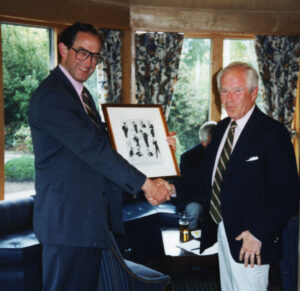
Patrick held a place to study medicine at St Thomas’s Hospital in 1944. However, as an RAF cadet he was trained as a pilot so he deferred entry in order to fly Spitfires for the last year of the war. When he returned to Medical School, the Dean asked him how many planes he had brought down. Patrick replied: “Three sir, but unfortunately two of them were ours – I wasn’t any good at landing on aircraft carriers”. He drove his red Mini Cooper S just like a Spitfire. An elegant golfer, great companion, and a very popular Chelsea General Practitioner – we were all glad to have known him.
Harold Boundy
Harold had a very long membership straddling both our half centuries, culminating in our Presidency in the late 1970s. The gentlest of gentlemen, never without a smile on his face and invariably generous, he set a salutary example.
Dennis Marler
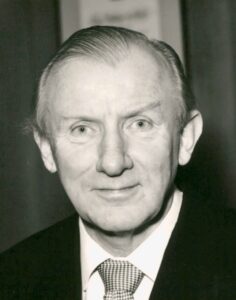
Dennis, Harold’s son-in-law, joined in 1965. He served a long shift as Scribe, and later President. Dennis was Chief Executive and then Chairman of Capital and Counties Property Company.
Bob Wadsworth
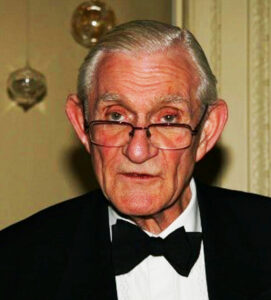
Bob was President of the Society from 1995 until his death in 2011. His family had been associated with Malden Golf Club where he was Captain in 1973 and President a few years later. He married late in life and moved to Leicester. His enthusiasm for the Gophers’ Society was very evident when, year after year as the non-playing President, he would make the long train journey from his home in Leicester to The Berkshire for the Spring and Autumn Meetings. He would spend the day, rain or shine, standing at the 18th Par 3 green on the Red course measuring closest the hole!
Michael Boundy
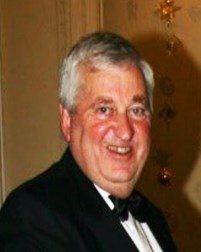
Michael, Harold’s son, also served us very well as Scribe and latterly as President until he was taken from us too young in 2011. He was a chartered accountant and main-tained the very high standards of the Boundy dynasty.
Bernard Humphrey
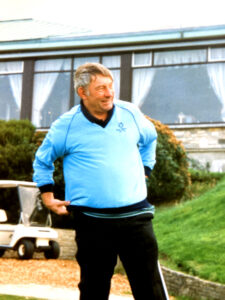
Bernard was the Chief Executive of the Guardian Building Society (now Cheltenham & Gloucester). A larger-than-life character who had played serious rugby as a youngster, and was a very generous host as a Twickenham debenture holder. His golf was an unusual combination of very ordinary quality and ultimate determination and competitiveness. More than that, he is remembered by his ability to “forge candles with many ends and burn them all at once”.
Tony Hart
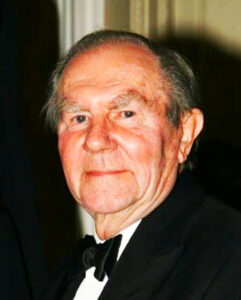
Tony was a ‘top end’ loss adjuster (and senior partner of our recent President, Chris Hardy). He specialised in the aftermath of serious crimes, including Brinksmat. He was a determined golfer and fancied himself particularly as a good putter. So even when too old and frail to play a round, he faithfully continued to attend the Autumn Meeting to play in the putting competition.
Geoff Wyborn
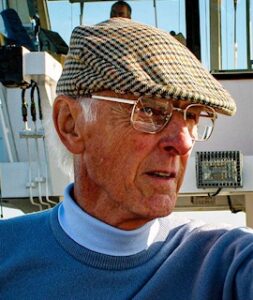
Geoff was Scribe from 2007 until his sad death in 2022. Geoff was by profession a distinguished academic mathematician and statistician, as modest about his own substantial achievements as he was about his talented family. A fine golfer, an excellent club cricketer, and a witty after dinner speaker; we remember with great affection and gratitude all he did for us individually and for the Society.
It is remarkable how few Scribes the Society has had. Bob Williams was followed by Denis Marler, Barry Mustoe, Michael Boundy, Roy Sturdy, and then Geoff. With the passing of Geoff, we have introduced a committee with shared responsibility so we no longer have a Scribe, who does everything!
Epilogue
Centenaries are about looking back on achievements and recalling the greats of the past. Not all Societies, the minority, survive so long. Perhaps the keys to our success have been a fortunate mix of good leadership with remarkable continuity, a formula of playing decent courses with fun the main objective, numbers limited so that it is easier to get to know people, and the happy concept of convivial absorption. For the future, managing uncertainty is always a good idea. There are threats: for example, golfing inflation and social changes making it more difficult to get week-day time off for those still working. The ultimate key will be maintaining recruitment of like-minded new members. How good it would be if Gophers were reading this in 2074, or (dream on) 2124!
Most of the research for the content was done by Geoff Wyborn, our scribe until he died in September 2022. Bill Turton took over the challenge of gathering all the information and putting it into print. This was edited by Chris Greet and we are very thankful to John McNiff for providing a lot of the photography.